
Understanding Online Casino Licensing: A Technical and Regulatory Overview
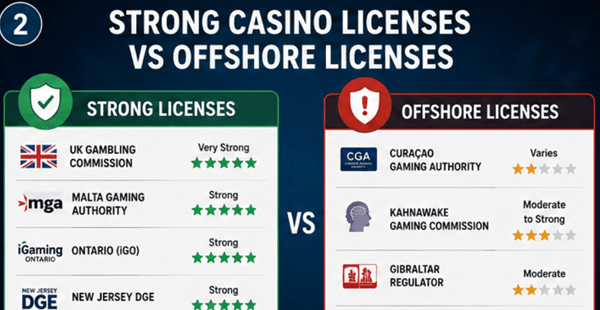
In the rapidly evolving digital gambling ecosystem, licensing is the foundational element that separates legitimate operators from rogue entities. For technology professionals, affiliates, and platform architects, understanding the nuances of online casino licensing is not merely a legal formality—it is a critical component of risk management, infrastructure design, and market strategy. This article dissects the technical and regulatory layers of casino licensing, offering a professional blueprint for evaluating jurisdictional credibility.
What Is an Online Casino License?
An online casino license is an official authorization granted by a recognized regulatory body—often called a jurisdiction or authority—that permits an operator to offer real-money gambling services within a specific territory or to specific users. From a technical perspective, this license dictates the operational parameters: which games can be hosted, how player funds must be segregated, what cybersecurity standards apply, and how data must be reported to authorities.
Licenses are not monolithic. They vary in cost, complexity, and prestige. A license from the Malta Gaming Authority (MGA) or the UK Gambling Commission (UKGC) carries significantly different technical and financial obligations than one from a smaller, offshore jurisdiction like Curacao or Anjouan.
Key Regulatory Jurisdictions and Their Technical Requirements
Different licensing bodies impose distinct technical mandates. Below is a comparison of major jurisdictions relevant to high-stakes operators.
| Malta (MGA) | $30,000 – $100,000 | Segregated player funds, RNG certification, GDPR compliance, local data storage | 4–6 months |
| UK (UKGC) | $150,000+ | Real-time reporting, ADR (Alternative Dispute Resolution), strict AML/KYC, server location in UK | 6–12 months |
| Curacao (Gaming Control Board) | $10,000 – $30,000 | Basic RNG testing, minimal AML, no local server requirement | 1–3 months |
| Gibraltar | $100,000+ | High capital reserves, UK-aligned AML, annual audits | 6–9 months |
| Isle of Man | $50,000 – $80,000 | Player fund protection, network security audits, eCOGRA certification | 3–5 months |
Each jurisdiction updates its technical standards periodically. For example, the UKGC now mandates real-time data feeds for suspicious betting patterns, while the MGA requires annual penetration testing reports from independent cybersecurity firms.
Core Technical Pillars of a Credible License
A license is only as strong as the technical infrastructure that supports it. When evaluating an operator or planning a platform, focus on these four pillars.
1. Random Number Generator (RNG) Certification
Every legitimate online casino must use a certified RNG to ensure game outcomes are unpredictable and fair. Testing labs such as eCOGRA, GLI (Gaming Laboratories International), and BMM Testlabs issue certificates that regulators accept. Without a valid RNG certificate, a license is effectively void for casino games.
2. Player Fund Segregation
Top-tier licenses require operators to hold player deposits in separate bank accounts or trusts, distinct from operational capital. This protects players if the operator becomes insolvent. Technically, this means the payment gateway and accounting systems must support dual-ledger architecture.
3. Anti-Money Laundering (AML) and Know Your Customer (KYC)
Licensed operators must implement automated AML/KYC workflows. This includes ID verification, PEP (Politically Exposed Person) screening, transaction monitoring, and suspicious activity reporting. Jurisdictions like the UKGC require real-time reporting via the Gambling Commission’s portal.
4. Data Security and GDPR Compliance
If the license targets European users, GDPR compliance is mandatory. This affects server location, encryption standards (TLS 1.3+), data retention policies, and user consent mechanisms. A license from a non-EU jurisdiction does not exempt an operator from GDPR if it processes EU citizen data.
How Licensing Affects Platform Architecture
From a CTO’s perspective, the license dictates the tech stack. For example:
- Hosting: Some licenses require servers within the jurisdiction (e.g., UKGC). Others allow cloud hosting in any region.
- Payment Processing: Licensed operators must use PCI-DSS compliant gateways and often cannot accept crypto without additional licensing.
- Game Integration: Only games from providers certified by the same jurisdiction can be offered. This limits the available game library.
- Reporting APIs: Regulators increasingly require automated API endpoints for real-time data submission (e.g., bet logs, player activity).
Failure to align architecture with licensing requirements results in fines, license revocation, or criminal liability for executives.
Red Flags in Online Casino Licensing
Not all licenses are equal. Watch for these warning signs:
The Future of Licensing: Tech-Driven Regulation
Regulators are moving toward real-time, API-driven oversight. The UKGC’s “Remote Gambling and Software Technical Standards” already require operators to submit data in machine-readable formats. Emerging jurisdictions like Sweden and Germany are following suit. For operators, this means investing in compliance automation, log aggregation, and immutable audit trails.
Blockchain-based licensing is also emerging, with some jurisdictions exploring smart contracts to automate fund segregation and reporting. While not yet mainstream, this trend signals a future where licensing is not a static certificate but a dynamic, code-enforced agreement.
Conclusion
Understanding online casino licensing is a technical discipline, not just a legal checkbox. A credible license protects players, ensures fair play, and dictates the very architecture of the platform. Whether you are building a casino, integrating with one, or evaluating affiliate partnerships, always verify the license’s jurisdiction, technical requirements, and enforcement history. In the high-stakes world of online gambling, licensing is your first and strongest line of defense.