
Common Sports Betting Terms Explained
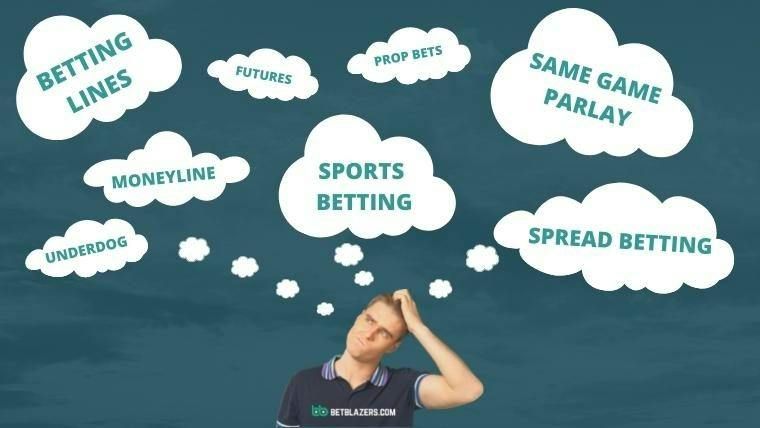
Sports betting has evolved from a niche pastime into a global industry powered by sophisticated technology platforms, real-time data feeds, and algorithmic pricing models. Yet for all its digital polish, the language of betting remains rooted in a vocabulary that can confuse newcomers and seasoned tech professionals alike. Understanding this terminology is essential, whether you are building a betting application, analyzing market data, or simply looking to place an informed wager. This guide breaks down the most common sports betting terms with clarity and precision.
The Fundamentals of a Bet
Every wager begins with a few core concepts. Mastering these terms provides the foundation for understanding more advanced betting strategies and the technology that supports them.
- Stake: The amount of money a bettor risks on a particular outcome. In platform architecture, the stake is the principal value committed to a wager before any payout calculation occurs.
- Odds: The numerical expression of the probability and potential payout of an event. Odds are the primary data output of any sportsbook’s pricing engine.
- Payout: The total return a bettor receives if the wager wins, including the original stake in most formats.
- Line: The current odds or point spread offered on a given market. Lines shift dynamically based on betting volume, injuries, and news.
- Action: The total amount of money wagered on a specific event or across a sportsbook. High action often signals heavy market interest and triggers line movement.
Understanding Odds Formats
Odds are expressed in three primary formats, each dominant in different regions. A robust betting platform must normalize and convert between these formats in real time.
| Decimal | 2.50 | Europe, Canada, Australia |
| American (Moneyline) | +150 / -200 | United States |
| Fractional | 3/2 | United Kingdom, Ireland |
A decimal odd of 2.50 means a $100 stake returns $250 total. American odds of +150 indicate a $100 stake yields $150 in profit, while -200 means a bettor must wager $200 to win $100. Fractional odds of 3/2 represent a $3 profit for every $2 staked. Converting between these formats is a routine function in any odds aggregation service.
Types of Bets
Betting markets have multiplied as technology has enabled granular, event-level wagering. The following categories represent the most widely offered bet types.
Moneyline
A moneyline bet is a straightforward wager on which team or player will win the event outright, with no point spread involved. It is the simplest market and often the entry point for new bettors.
Point Spread
A point spread assigns a handicap to the favored team, requiring it to win by a specified margin. This market equalizes competition between unevenly matched opponents and is a staple of American football and basketball betting.
Over/Under (Totals)
Also known as totals, this bet concerns the combined score of both teams. A bettor wagers whether the final total will be over or under a number set by the sportsbook.
Prop Bets
Proposition bets focus on specific events within a game rather than the final result. Examples include the number of strikeouts a pitcher records or the first player to score. Prop bets are heavily data-driven and often powered by real-time statistical feeds.
Parlay
A parlay combines multiple wagers into a single bet, multiplying the potential payout while increasing risk. Every leg must win for the parlay to pay out. From a technology standpoint, parlays require complex correlation analysis to price accurately.
Teaser
A teaser allows a bettor to adjust the point spread or totals in their favor across multiple selections, typically at reduced odds. It is a risk-management tool for bettors who want more favorable lines.
Advanced Terminology
Beyond the basic markets, a rich vocabulary describes the mechanics of pricing, risk, and market behavior. These terms are particularly relevant to developers and analysts working on betting platforms.
- Vig (Juice): The commission a sportsbook charges on a wager, built into the odds. It is the primary revenue mechanism for bookmakers.
- Closing Line: The final odds offered before an event begins. The closing line is widely regarded as the most accurate reflection of true probability.
- Sharp: A bettor or entity known for consistently profitable, informed wagering. Sharp money influences line movement significantly.
- Square: A casual bettor who typically wagers on popular teams or public favorites. Square money often pushes lines in predictable directions.
- Handle: The total amount of money wagered across a sportsbook over a given period. Handle is a key performance indicator in the industry.
- Hold: The percentage of total handle a sportsbook retains as profit after paying out winning bets.
- Steam: A sudden, significant line movement caused by a large volume of sharp bets. Steam moves are closely monitored by professional bettors.
- Bad Beat: A wager that appears certain to win but loses due to a late, unexpected event. Bad beats are a common topic in betting communities.
- Push: A tie between the bet’s outcome and the line, resulting in the return of the stake without profit or loss.
- Future: A wager placed on an event that will occur well in the future, such as a team winning a championship at the start of the season.
Why Terminology Matters in the Tech Stack
For technology professionals, betting terminology is not merely jargon—it maps directly to system components. Odds formats require normalization engines. Lines and markets demand low-latency data pipelines. Handle and hold calculations feed into analytics dashboards and compliance reporting. Understanding these terms enables engineers, product managers, and data scientists to communicate effectively with trading teams and to architect platforms that meet the rigorous demands of real-time wagering.
As the industry continues to integrate with mobile applications, AI-driven pricing, and blockchain-based settlement, fluency in this vocabulary will remain a decisive advantage. Whether you are optimizing a betting API or evaluating a market, the terms outlined here provide the clarity needed to operate with confidence.