

Classic Casino Games vs Modern Casino Games: A Technological Evolution
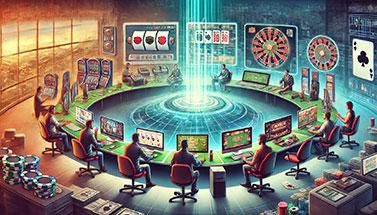
The casino industry has undergone a profound transformation over the past three decades. What was once a domain defined by physical tables, mechanical reels, and face-to-face interaction has evolved into a sophisticated digital ecosystem powered by advanced software architecture, real-time networking, and immersive graphics engines. Yet despite this technological leap, classic casino games remain remarkably resilient. Understanding the distinction between classic and modern casino games is essential for operators, developers, and players alike—each format carries distinct technical characteristics, user experience trade-offs, and business implications.
The Foundation: What Defines Classic Casino Games
Classic casino games are the archetypes from which the entire industry grew. They include table staples such as blackjack, roulette, baccarat, poker, and craps, along with mechanical slot machines featuring three reels and a limited set of symbols. Their design philosophy prioritizes simplicity, transparency, and immediacy.
Core Characteristics of Classic Games
- Mechanical or physical randomness: Outcomes are generated by shuffled decks, spinning wheels, or physical reels rather than pseudorandom number generators (PRNGs).
- Transparent rules: The mechanics are visible and often mathematically well-documented, allowing players to calculate odds with precision.
- Social atmosphere: Classic games are inherently communal, with players sharing tables, dealers, and rituals.
- Low entry complexity: Most classic games require no technical literacy—only a basic understanding of rules.
For decades, these games defined the casino experience. Their longevity stems from a combination of psychological familiarity, genuine randomness, and the tactile satisfaction of chips, cards, and reels.
The Rise of Modern Casino Games
Modern casino games emerged from the convergence of internet infrastructure, mobile computing, and high-performance graphics. Online casinos, live dealer platforms, and blockchain-based gaming have redefined what a casino game can be. Modern games are not merely digital replicas of classics—they are engineered products built on complex software stacks.
Core Characteristics of Modern Games
- Algorithmic randomness: Certified PRNGs and, increasingly, provably fair cryptographic algorithms govern outcomes.
- Immersive interfaces: HD video streaming, 3D rendering, and animation create engaging visual experiences.
- Instant accessibility: Games are available 24/7 across desktop and mobile devices without geographic constraints.
- Feature-rich mechanics: Modern slots and table variants include bonus rounds, multipliers, cascading reels, and interactive side bets.
- Data-driven personalization: Operators use analytics to tailor game recommendations, betting limits, and promotions.
Modern casino games also encompass categories that simply did not exist in the classic era, including live dealer games, crash games, and gamified titles with progression systems borrowed from video gaming.
Direct Comparison: Classic vs Modern
The following table outlines the primary differences across technical, experiential, and operational dimensions.
| Randomness Source | Physical decks, wheels, reels | PRNGs, RNG certification, blockchain |
| Accessibility | Limited to physical venues | Global, 24/7, multi-device |
| Social Interaction | Face-to-face, communal | Live chat, streaming, virtual tables |
| Game Complexity | Low to moderate | Moderate to high |
| Visual Design | Physical, tactile, minimal | HD, 3D, animated, themed |
| Speed of Play | Moderate, human-paced | Fast, automated, instant |
| House Edge Transparency | Well-documented mathematically | Varies; RTP disclosed per title |
| Regulatory Oversight | Established, venue-based | Jurisdiction-dependent, evolving |
Technical Infrastructure Behind Modern Games
From an engineering perspective, modern casino games represent a substantially more complex product. A single online slot title may involve a game engine, a random number generator certified by independent testing laboratories, a backend server for state management, a payment gateway, and a front-end optimized for latency and responsiveness.
Key Technical Components
These components introduce new challenges—latency, server uptime, security vulnerabilities—that classic games never faced. However, they also unlock scalability that physical casinos cannot match.
Player Experience: Trade-Offs and Preferences
Classic and modern games appeal to fundamentally different player motivations. Classic players often value ritual, atmosphere, and the tangible authenticity of a shuffled deck. They appreciate the mathematical clarity of blackjack strategy or the physics of a roulette wheel. For these players, the absence of technology is a feature, not a limitation.
Modern players, by contrast, prioritize convenience, variety, and stimulation. They expect instant access, rapid session pacing, and rich audiovisual feedback. Younger demographics raised on video games respond favorably to gamified mechanics such as achievements, level progression, and narrative-driven slots.
Importantly, the two categories are not mutually exclusive. Many operators integrate both into a single platform, allowing classic table games to coexist with modern video slots and live dealer streams. This hybrid model reflects the industry’s recognition that player preferences are diverse and often situational.
The Convergence of Classic and Modern
The boundary between classic and modern casino games is steadily blurring. Live dealer platforms bring the social authenticity of classic tables into a digital environment. Modern slots increasingly borrow classic symbols and mechanics—fruit machines, cherries, sevens—reinterpreted through advanced graphics. Virtual reality casinos promise yet another layer of immersion, blending physical presence with digital flexibility.
For developers and operators, the strategic implication is clear: success lies not in choosing one format over the other, but in understanding the underlying player psychology, technical requirements, and regulatory context of each. Classic games offer proven engagement and mathematical transparency. Modern games offer scalability, personalization, and innovation.
Conclusion
The evolution from classic to modern casino games is a story of technological progress meeting enduring human preferences. Classic games remain the gold standard for authenticity and mathematical clarity, while modern games push the boundaries of accessibility, immersion, and design. The most forward-thinking platforms recognize that both formats serve essential roles in a mature, diversified gaming ecosystem. As technology continues to advance—through AI-driven personalization, VR environments, and blockchain verification—the distinction will likely become less a matter of opposition and more a matter of integration, with classic foundations supporting modern innovation.