

How Mobile Apps Are Changing Sports Betting
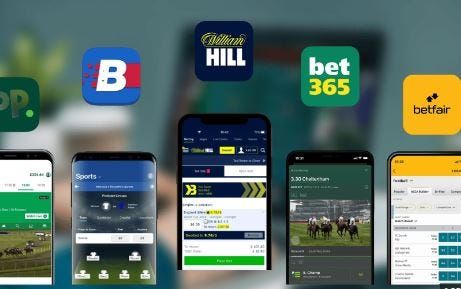
Sports betting has existed for as long as organized competition itself, but the way people place wagers has never changed as dramatically as it has in the past decade. The smartphone is the single most disruptive force in the industry, transforming a pastime once confined to physical sportsbooks, back-room bookmakers, and land-based casinos into an always-available digital experience. Mobile applications have not simply digitized the old model; they have rewritten the rules of access, engagement, and scale. For operators, technologists, and bettors alike, understanding this shift is essential to understanding where the market is heading next.
From Betting Window to Lock Screen
For most of the twentieth century, placing a sports wager required physical presence. Bettors drove to Las Vegas sportsbooks, visited a local bookmaker, or filled out paper slips at an off-track parlor. The rise of online sportsbooks in the late 1990s moved the transaction to the desktop, but desktop betting still tethered users to a chair. The mobile app removed that final constraint.
Today, a bettor can research a game, compare odds, place a wager, and watch the outcome unfold in real time, all from a device that stays in their pocket. This convenience has collapsed the friction between impulse and action, and that collapse is precisely what has driven the industry’s explosive growth.
The Technical Pillars Behind Mobile Betting
What makes modern sports betting apps possible is a convergence of several mature technologies working in unison. Each pillar addresses a specific requirement that older systems could not meet at scale.
- Real-time data feeds: Live odds, injury reports, and in-play statistics stream continuously, allowing lines to update within seconds.
- Low-latency infrastructure: Cloud platforms and edge computing ensure that a bet placed in the final seconds of a game is processed without delay.
- Secure payment rails: Tokenized transactions, digital wallets, and instant bank transfers have replaced the slow, manual deposit and withdrawal processes of the past.
- Geolocation services: GPS and IP verification confirm that a user is physically located in a jurisdiction where betting is legal.
- Advanced analytics and AI: Machine learning models power personalized promotions, fraud detection, and dynamic odds generation.
Together, these technologies form the backbone of an experience that feels instantaneous to the user, even though enormous computational work happens behind every tap.
In-Play Betting and the Attention Economy
Perhaps the most significant behavioral change driven by mobile apps is the rise of in-play, or live, betting. When wagers could only be placed before a game started, betting was a pre-event ritual. Mobile apps turned it into a continuous activity that unfolds alongside the game itself.
Users can now bet on the next pitch, the next possession, or whether a team will score within the next ten minutes. This format keeps bettors engaged for the full duration of an event rather than only at the opening whistle, and it aligns sports betting with the broader attention economy in which platforms compete for continuous engagement. The result is higher session times, more frequent transactions, and a fundamentally different relationship between fan and game.
User Experience as a Competitive Battleground
In a crowded market, user experience has become a primary differentiator. Operators invest heavily in interface design because the slightest friction can drive a user to a competitor’s app. The table below summarizes how mobile-first design has reshaped key aspects of the betting experience.
| Access | Physical location and business hours | 24/7 from any legal jurisdiction |
| Odds Updates | Printed sheets, periodic changes | Real-time, continuously refreshed |
| Payments | Cash at the window | Digital wallets and instant transfers |
| Personalization | Limited or none | AI-driven offers and recommendations |
| Bet Types | Mostly pre-match | Extensive in-play and micro-markets |
The contrast illustrates a broader point: mobile apps have not merely ported an existing product, they have redefined what the product is.
Regulation, Responsibility, and the Trust Layer
The expansion of mobile betting has forced regulators to adapt quickly, and app developers have had to build compliance directly into their products. Geolocation checks, age verification, self-exclusion tools, deposit limits, and responsible gambling prompts are now standard features rather than optional add-ons.
Trust has become a technical requirement. Users expect transparent odds, fast payouts, and clear terms, while regulators expect auditable systems and robust anti-money laundering controls. Apps that fail on either front lose their licenses or their users, often both. In this environment, compliance technology is not a cost center but a competitive advantage.
Data, Personalization, and Ethical Boundaries
Mobile apps generate vast amounts of behavioral data, and operators use it to tailor the experience. Personalized promotions, targeted notifications, and dynamic bonuses can improve engagement, but they also raise ethical questions about where persuasion ends and exploitation begins.
These are not abstract concerns. As mobile betting matures, the operators that thrive will be those that treat responsible design as integral to their product rather than as a regulatory obligation bolted on afterward.
The Road Ahead: Integration and Immersion
The next phase of mobile betting will likely blur the line between the wager and the broadcast. Streaming integrations allow users to watch an event and bet within the same interface. Wearables and voice assistants may soon support micro-wagers placed without opening an app at all. Augmented reality could overlay live odds onto a stadium view.
Each of these developments depends on the same foundation: fast data, secure transactions, and intuitive design. The organizations that master that foundation will shape the next decade of the industry, while those that cling to legacy models will find themselves increasingly irrelevant.
Conclusion
Mobile apps have fundamentally changed sports betting by removing geographic and temporal barriers, enabling real-time in-play markets, and turning engagement into a continuous, personalized experience. The technology stack behind this shift is sophisticated, the regulatory environment is demanding, and the ethical questions are unresolved. What is certain is that the smartphone is now the primary venue for sports wagering, and the operators who understand that reality at a technical and human level will define the future of the market.