

A Beginner’s Guide to Blackjack: Rules, Strategy, and Smart Play
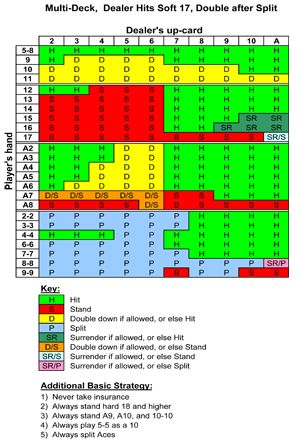
Blackjack is one of the most accessible and strategically rich games in any casino, digital or physical. Unlike purely chance-based games, blackjack rewards decision-making, basic strategy, and discipline. For newcomers, understanding the flow of the game, the value of each card, and the core decisions available at the table is the fastest route to confident play. This guide covers everything a beginner needs to sit down, follow the action, and make informed choices.
What Is Blackjack?
Blackjack, also called twenty-one, is a comparing card game played between a player and a dealer. The objective is simple: build a hand whose total value is closer to 21 than the dealer’s hand without exceeding 21. A hand that exceeds 21 is called a bust, and it loses immediately. The term “blackjack” refers to a two-card hand totaling 21, typically an Ace paired with a ten-value card, which usually pays a premium.
Card Values at a Glance
| 2 through 10 | Face value (e.g., a 7 is worth 7) |
| Jack, Queen, King | 10 points each |
| Ace | 1 or 11, whichever benefits the hand |
The Ace is the only flexible card. It counts as 11 when that keeps the hand at or below 21, and as 1 when counting it as 11 would cause a bust. A hand containing an Ace counted as 11 is called a soft hand; once the Ace must drop to 1, the hand becomes hard.
How a Round Works
The Dealer’s Fixed Rules
Dealers do not make decisions. They follow a strict procedure: typically, the dealer must hit on any total of 16 or less and stand on 17 or higher. Some tables require the dealer to hit a soft 17 (an Ace plus six), which slightly favors the house. Understanding this rule is important because it shapes the optimal strategy for every hand you play.
Your Core Decisions
- Hit: Take another card to increase your total.
- Stand: Keep your current total and end your turn.
- Double Down: Double your original bet and receive exactly one more card. Best reserved for strong starting hands.
- Split: When your first two cards are a pair, you may divide them into two separate hands, each with its own bet.
- Surrender: Forfeit half your bet and exit the hand. Available only in certain games and situations.
Each decision carries mathematical weight. A hit on a 12 against a dealer’s 2 is far more dangerous than a hit on a 12 against a dealer’s 7. This is where basic strategy becomes essential.
Basic Strategy: The Foundation
Basic strategy is a mathematically derived set of decisions that produces the lowest possible house edge when followed consistently. It is not gambling intuition; it is calculation. While the full chart is extensive, a few principles anchor it.
Key Guidelines for Beginners
- Always split Aces and 8s. Aces split into two strong hands; 8s split because 16 is the worst total you can hold.
- Never split 10s or 5s. Two 10s total 20, an excellent hand. Two 5s total 10, ideal for doubling down.
- Stand on hard 17 or higher. The risk of busting outweighs any potential gain.
- Hit on hard 11 or lower. You cannot bust with one card, so hitting is free of risk.
- Double down on 10 or 11 when the dealer shows a weak card, typically 2 through 6.
Understanding the Dealer’s Bust Card
The dealer’s face-up card tells you a great deal. When the dealer shows a 2 through 6, they are statistically likely to bust, meaning your priority shifts to not busting yourself. When the dealer shows a 7 through Ace, they are likely to finish with a strong hand, and you must play more aggressively to compete. This single concept explains most of basic strategy.
The House Edge and Why It Matters
Blackjack, played with basic strategy, offers one of the lowest house edges of any casino game, often under 1 percent depending on the specific rules. However, that advantage erodes quickly with poor decisions. Deviating from basic strategy, chasing losses, or increasing bets without reason all hand value back to the house. Discipline is not a personality trait in blackjack; it is a measurable edge.
Rules That Affect the Edge
| Dealer stands on soft 17 | Favorable |
| Blackjack pays 3:2 | Favorable |
| Blackjack pays 6:5 | Unfavorable |
| Double after split allowed | Favorable |
| Late surrender offered | Slightly favorable |
Before sitting down, check these rules. A table that pays 6:5 on blackjack can increase the house edge substantially, enough to outweigh otherwise generous conditions.
Common Beginner Mistakes
- Assuming the dealer has a ten underneath. The hidden card is unknown; play the probabilities, not assumptions.
- Mimicking the dealer’s rules. Dealers must hit 16 and stand on 17, but that does not mean you should.
- Ignoring the split and double options. These are value opportunities, not optional extras.
- Playing hunches. Basic strategy outperforms intuition over time, every time.
Getting Started Responsibly
Begin with free or low-stakes games to internalize the rules and practice basic strategy without financial pressure. Many online platforms offer demo tables, and physical casinos often have low-limit tables during off-peak hours. Set a session budget before you play, treat it as entertainment spending, and stop when it is gone. Blackjack is a game of small, repeatable edges, not a path to guaranteed income.
The Bottom Line
Blackjack rewards preparation. Learn the card values, understand the dealer’s fixed rules, memorize the core principles of basic strategy, and choose tables with favorable conditions. Master those elements, and you move from guessing to playing with a genuine mathematical foundation. That is the difference between a beginner and a player who lasts.