

How Baccarat Works: A Technical Breakdown of the Game’s Mechanics
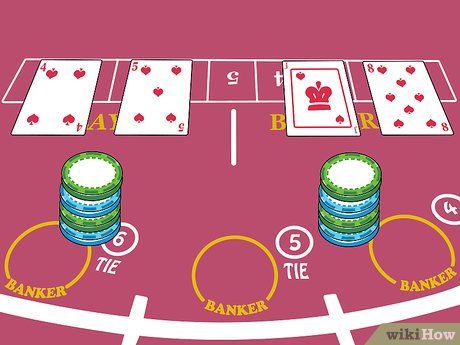
Baccarat occupies a unique position in the casino ecosystem. Unlike poker, where player decisions and psychological reads drive outcomes, or blackjack, where strategy and card counting reshape the odds, baccarat is a game of near-pure probability governed by a rigid, deterministic ruleset. For technologists and analytically minded players, this makes it a fascinating study in algorithmic simplicity, statistical edge, and user-interface efficiency. This article examines the internal mechanics of baccarat, from card distribution to the mathematical foundation of its betting markets.
The Core Architecture: Two Hands, One Winner
At its foundation, baccarat is a comparison game. Two hands are dealt — the Player hand and the Banker hand — and the objective is to predict which hand will finish with a total value closest to nine. Despite the terminology, the “Player” hand does not represent the human participant; both hands are dealt according to fixed rules, and the bettor simply wagers on one of three outcomes:
- Player — the Player hand wins.
- Banker — the Banker hand wins.
- Tie — both hands finish with identical totals.
This tripartite structure defines the entire decision space. There are no hit-or-stand choices, no doubling down, no splitting. The game’s logic executes independently of the player once the cards leave the shoe.
Card Values and Hand Calculation
Baccarat uses a modulo-10 system for scoring, which is the engine behind its distinctive totals. Card values are assigned as follows:
| Ace | 1 |
| 2 through 9 | Face value |
| 10, Jack, Queen, King | 0 |
When a hand’s sum exceeds nine, only the last digit counts. A hand of 7 and 6 totals 13, which reduces to 3. A hand of 10 and 9 totals 19, which reduces to 9. This modulo-10 reduction means the highest possible hand is a natural 9, followed by a natural 8. A two-card total of 8 or 9 is called a natural, and when either hand holds one, the round ends immediately without further draws.
The Drawing Rules: A Deterministic Algorithm
The third-card logic in baccarat is often perceived as complex, but it is essentially a decision tree hardcoded into the game’s ruleset. Understanding it is the key to demystifying the game.
The Player Hand
The Player hand acts first and its behavior is straightforward:
The Banker Hand
The Banker hand’s decision depends not only on its own total but also on whether the Player drew a third card and what that card’s value was. This conditional dependency is what gives the Banker hand its statistical advantage. The rules can be summarized as follows:
| 0 – 2 | Always draws |
| 3 | Draws unless Player’s third card is an 8 |
| 4 | Draws if Player’s third card is 2–7; otherwise stands |
| 5 | Draws if Player’s third card is 4–7; otherwise stands |
| 6 | Draws if Player’s third card is 6 or 7; otherwise stands |
| 7 | Always stands |
| 8 – 9 | Natural; always stands |
This asymmetry is deliberate. By conditioning the Banker’s draw on the Player’s outcome, the ruleset mathematically tilts the probabilities in the Banker’s favor — which is why the Banker bet carries a lower house edge.
House Edge and Payout Structures
Baccarat’s economics are defined by its payout ratios and the resulting house edge. The following table outlines the standard payouts and the approximate house advantage for each bet type:
| Player | 1:1 | ~1.24% |
| Banker | 0.95:1 (5% commission) | ~1.06% |
| Tie | 8:1 or 9:1 | ~14.4% (8:1) |
The Banker bet’s 5% commission exists to offset its inherent statistical advantage. Without it, the Banker bet would offer a positive expected value for the player — an impossibility in a commercial casino. The Tie bet, despite its attractive payout, carries a prohibitively high house edge and is widely regarded as a mathematically inefficient wager.
Why the Banker Bet Prevails
The Banker’s edge is not arbitrary. It emerges from the conditional draw rules described above. Because the Banker hand can react to the Player’s third card, it gains information that the Player hand cannot access. Over millions of simulated hands, this informational asymmetry produces a Banker win rate of approximately 45.86%, versus 44.62% for the Player and 9.52% for ties. The margin is small, but in a game played at high volume, it compounds decisively.
Technology, RNG, and the Digital Shift
Modern baccarat has migrated substantially to digital platforms. In online and electronic table games, the physical shoe is replaced by a random number generator, and the drawing ruleset is implemented as deterministic code. The statistical properties remain identical, provided the RNG is properly audited. Live-dealer variants reintroduce physical cards and streaming video but preserve the same algorithmic core, with optical recognition systems reading card values and feeding them into the software layer in real time.
For developers and analysts, baccarat is a textbook example of how a simple ruleset, executed consistently, produces a stable and predictable mathematical model. It is a game where the code is the strategy — and where understanding the algorithm is the only genuine edge available to the player.