

Popular Casino Games Explained: A Professional Guide to the Classics and Their Modern Variants
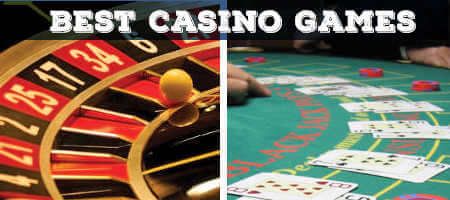
The casino floor is a ecosystem of probability, psychology, and polished presentation. For newcomers and seasoned players alike, understanding the mechanics behind the most popular casino games is essential—not only for enjoyment but also for making informed decisions. Whether you are exploring a land-based establishment or a regulated online platform, the same core principles apply. This guide breaks down the most widely played casino games, explains how they work, and highlights what distinguishes each from the others.
Table Games: The Foundation of Casino Gaming
Table games represent the traditional heart of the casino. They combine skill, strategy, and chance in varying proportions, and they remain the benchmark against which all other games are measured.
Blackjack
Blackjack, also known as twenty-one, is a comparing card game in which players compete against the dealer rather than one another. The objective is simple: build a hand with a total value closer to 21 than the dealer’s hand without exceeding 21.
- Card values: Number cards are worth their face value, face cards are worth 10, and aces count as either 1 or 11.
- Core actions: Players may hit (take another card), stand (end their turn), double down (double the bet for one final card), or split (separate a pair into two hands).
- House edge: With basic strategy, the house edge can be reduced to approximately 0.5%, making blackjack one of the most player-friendly games available.
Blackjack’s enduring appeal lies in its transparency. Skilled players can influence outcomes through decision-making, which is rare in casino gaming.
Roulette
Roulette is a game of pure chance centered on a spinning wheel and a small ball. Players place bets on where they believe the ball will land, choosing from numbers, colors, or groupings.
| European Roulette | 37 (0–36) | 2.70% |
| American Roulette | 38 (0, 00, 1–36) | 5.26% |
| French Roulette | 37 (0–36) | 1.35% with special rules |
The European variant is generally preferred by informed players due to its lower house edge. Roulette requires no strategy beyond bet selection, which makes it accessible but statistically unforgiving over time.
Baccarat
Baccarat is a card game in which players bet on one of two hands—the Player or the Banker—or on a tie. The rules are fixed, and players make no decisions after placing their wager. The hand closest to a total of 9 wins.
Baccarat’s simplicity and low house edge have made it a staple in high-limit rooms and online lobbies alike.
Slot Machines: The Volume Leaders
Slots account for the majority of casino revenue worldwide. Modern slots are digital, often featuring elaborate themes, animations, and bonus rounds, but their mechanics remain rooted in random number generation.
- Reels and paylines: Traditional slots use three reels; modern video slots may use five or more with dozens of paylines.
- Return to Player (RTP): The percentage of wagered money returned to players over time, typically between 90% and 98%.
- Volatility: Describes the frequency and size of payouts—low volatility offers frequent small wins, high volatility offers rare large wins.
Unlike blackjack or poker, slots involve no player skill. Outcomes are determined entirely by the random number generator, making them games of pure chance.
Video Poker: Where Skill Meets Chance
Video poker blends the structure of slots with the decision-making of draw poker. Players receive five cards and choose which to hold or discard, aiming to form the best possible poker hand.
Strategy matters significantly. A player using optimal strategy can reduce the house edge to under 1% on many machines, and certain pay tables—such as full-pay Jacks or Better—can return over 99%.
Specialty and Progressive Games
Beyond the classics, casinos offer a range of specialty games designed to attract diverse audiences.
- Craps: A dice game with a complex but mathematically favorable set of bets, including the Pass Line and Don’t Pass Line.
- Keno: A lottery-style game where players select numbers and hope they are drawn.
- Progressive jackpots: Slots or table games linked across multiple machines, where a portion of each wager feeds a growing prize pool.
Understanding the House Edge
The house edge is the mathematical advantage the casino holds over the player on every bet. It varies dramatically by game and by specific wager within that game. The table below summarizes typical edges for popular options.
| Blackjack (basic strategy) | 0.5% |
| Baccarat (Banker bet) | 1.06% |
| European Roulette | 2.70% |
| Video Poker (optimal play) | 0.5%–1% |
| Slots | 2%–10% |
Informed players gravitate toward games with lower edges, though entertainment value and personal preference remain valid considerations.
Final Thoughts
Popular casino games span a spectrum from pure chance to skill-influenced play. Blackjack, baccarat, and video poker reward strategic decision-making, while roulette and slots rely entirely on randomness. Understanding the house edge, variance, and rules of each game empowers players to choose experiences aligned with their goals—whether that means maximizing playtime, chasing jackpots, or simply enjoying the atmosphere of the casino floor.
As the industry continues to evolve, these foundational games remain the benchmark of casino entertainment, adapted but never replaced by new technology and shifting player preferences.