

Understanding Different Types of Poker: A Comprehensive Guide for the Modern Player
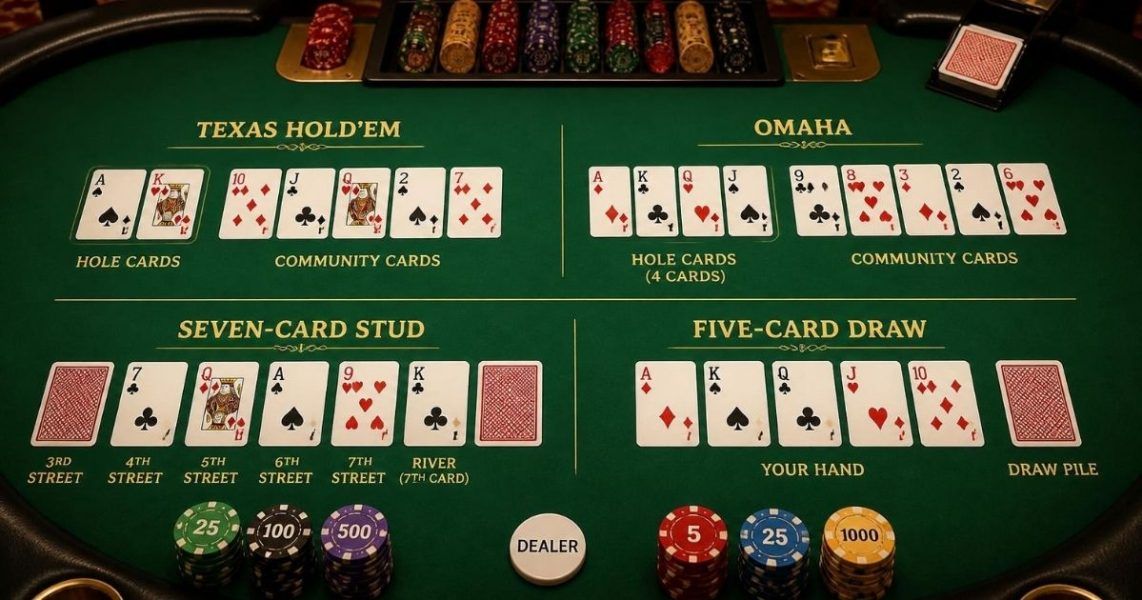
Poker is far more than a game of chance; it is a multifaceted discipline that blends mathematics, psychology, and strategic decision-making. For newcomers and seasoned enthusiasts alike, understanding the diverse variants of poker is essential to mastering the felt. Whether you are a tech professional analyzing game theory or a casual player looking to refine your skills, this guide will walk you through the primary types of poker, their mechanics, and the strategic nuances that define each.
The Two Primary Betting Structures
Before diving into specific game variants, it is critical to understand the two foundational betting structures that govern how players wager: Fixed-Limit and No-Limit. These structures dictate the pace, volatility, and strategic depth of any poker game.
Fixed-Limit Poker
In fixed-limit games, the bet and raise amounts are predetermined for each betting round. For example, in a $2/$4 game, players can only bet or raise in increments of $2 during the first two rounds and $4 during the final two rounds. This structure limits the potential loss per hand, making it ideal for beginners. However, it also reduces the ability to bluff effectively, as opponents are less likely to fold when the financial pressure is capped.
No-Limit Poker
No-limit poker, popularized by the World Series of Poker (WSOP), allows players to wager any amount up to their entire stack at any time. This structure introduces maximum psychological pressure and strategic complexity. A single hand can eliminate a player, making position, pot odds, and opponent reading paramount. No-limit Texas Hold’em is the most televised and widely played variant globally.
Community Card Poker Variants
Community card games are those in which players share a set of face-up cards on the table. These games dominate modern poker culture and are the most accessible for new players.
Texas Hold’em
Texas Hold’em is the undisputed king of poker. Each player receives two private hole cards and must form the best five-card hand using any combination of their hole cards and five community cards (the flop, turn, and river).
- Pre-Flop: Players receive two hole cards and a round of betting occurs.
- Flop: Three community cards are dealt, followed by a betting round.
- Turn: A fourth community card is dealt, followed by a betting round.
- River: A fifth and final community card is dealt, followed by the last betting round.
Strategy in Hold’em revolves heavily around position, hand ranges, and bet sizing. The button (dealer position) is the most advantageous, as you act last in every post-flop round.
Omaha
Omaha is a high-variance cousin of Texas Hold’em. Each player receives four hole cards instead of two and must use exactly two of them, combined with exactly three community cards, to form a five-card hand. This rule dramatically increases the number of possible hand combinations and the frequency of strong draws.
| Hole Cards | 2 | 4 |
| Community Cards Used | Any 5 of 7 | Exactly 3 |
| Hand Potential | Moderate | Very High |
| Best For | Beginners | Advanced Players |
Omaha Hi-Lo (Omaha Eight or Better) adds a split-pot dynamic: the best high hand and the best qualifying low hand (eight or lower) split the pot. This variant demands a deep understanding of both high and low hand rankings.
Draw Poker Variants
In draw poker, players are dealt a complete hand and then may replace some or all of their cards in an attempt to improve. This format is less common in modern casinos but remains popular in home games and online platforms.
Five-Card Draw
The classic game of the Old West. Each player receives five cards and may discard up to three (or four if holding an ace) in exchange for new ones. There is a single betting round before and after the draw. Strategy focuses on deception and reading opponents’ drawing patterns.
Deuce-to-Seven Draw
A lowball variant where the goal is to make the lowest possible hand, with aces high and straights and flushes counting against you. The best hand is 2-3-4-5-7 of mixed suits. This game is a favorite among high-stakes professionals for its pure strategic depth.
Stud Poker Variants
Stud poker is unique in that players receive a mix of face-down and face-up cards, with no community cards. Each player has their own individual board, creating complex information dynamics.
Seven-Card Stud
Each player is dealt two hole cards and one face-up card, followed by three more face-up cards and a final face-down card, with betting rounds after each deal. The best five-card hand wins. Seven-Card Stud was the dominant poker variant before Hold’em’s rise and remains a staple in mixed games.
Razz
Razz is Seven-Card Stud played as a lowball game. The lowest hand wins, with aces low and straights and flushes ignored. It is notorious for being one of the most mentally taxing poker variants due to the abundance of exposed information and the need for precise hand reading.
Choosing Your Game
Selecting the right poker variant depends on your goals, temperament, and skill level. Consider the following:
Conclusion
Understanding the different types of poker is the first step toward becoming a well-rounded player. Each variant offers a unique blend of strategy, psychology, and probability. By mastering the rules and nuances of multiple games, you not only improve your adaptability at the table but also deepen your appreciation for poker as a timeless intellectual pursuit. Whether you favor the explosive dynamics of No-Limit Hold’em or the calculated grind of Seven-Card Stud, there is a poker variant that will challenge and reward you for years to come.